The Vein Test Doesn't Work for Brown Skin: Here's Why
The popular vein test for determining undertone fails consistently for melanin-rich complexions. Learn the science behind why and discover what actually works for brown skin.
You've seen it everywhere: "Look at your wrist veins. Green means warm undertones. Blue means cool undertones."
This test wasn't designed for brown skin. It fails consistently for melanin-rich complexions.
Here's the science behind why.
The Science of Why Melanin Disrupts Vein Visibility
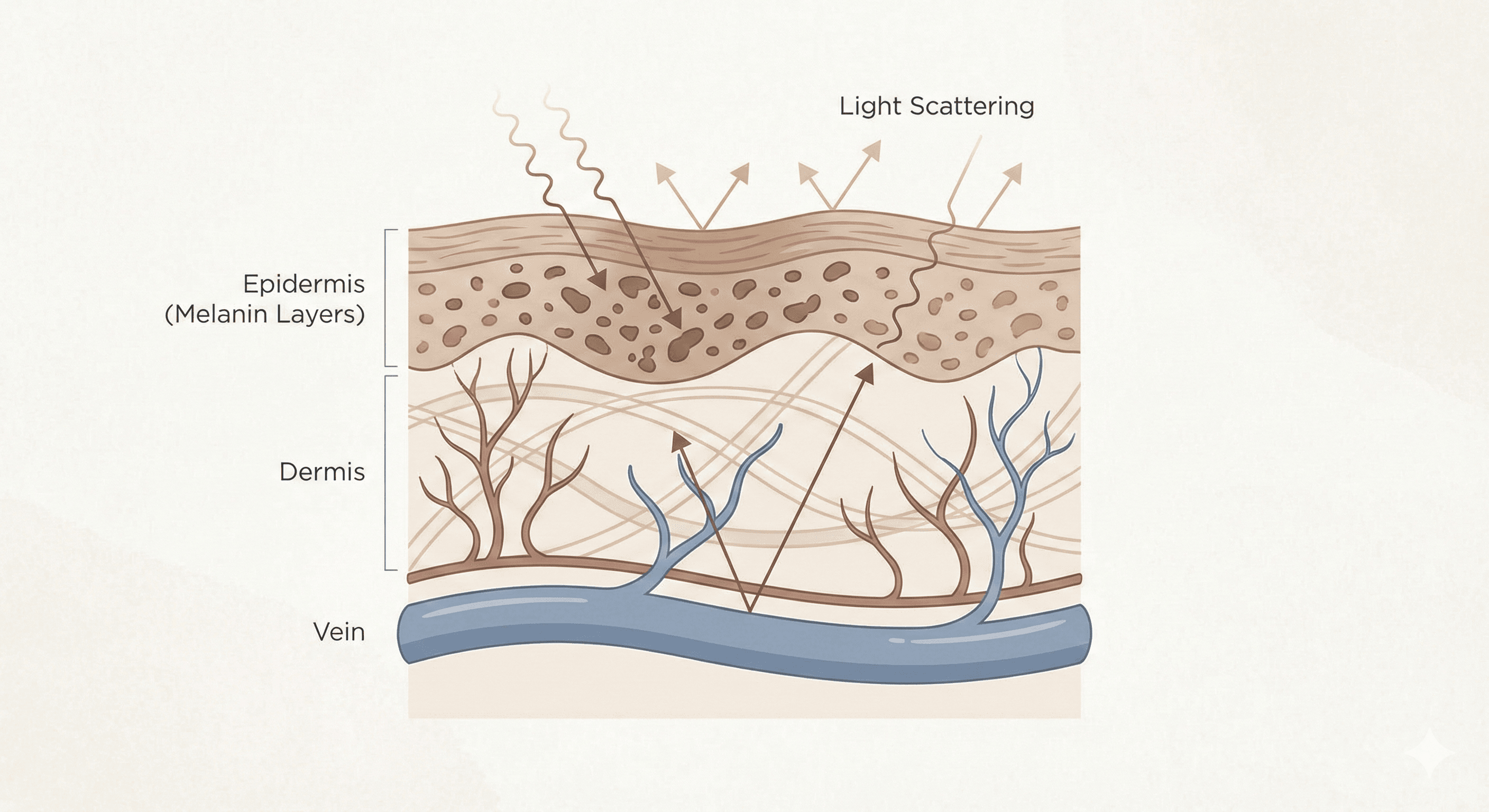
Vein color depends on two things: the blood vessel itself and what's above it.
For brown skin, melanin creates a filtering layer that:
- Absorbs and scatters light differently than lighter skin
- Obscures the true color of underlying blood vessels
- Creates optical mixing between vein color and melanin pigment
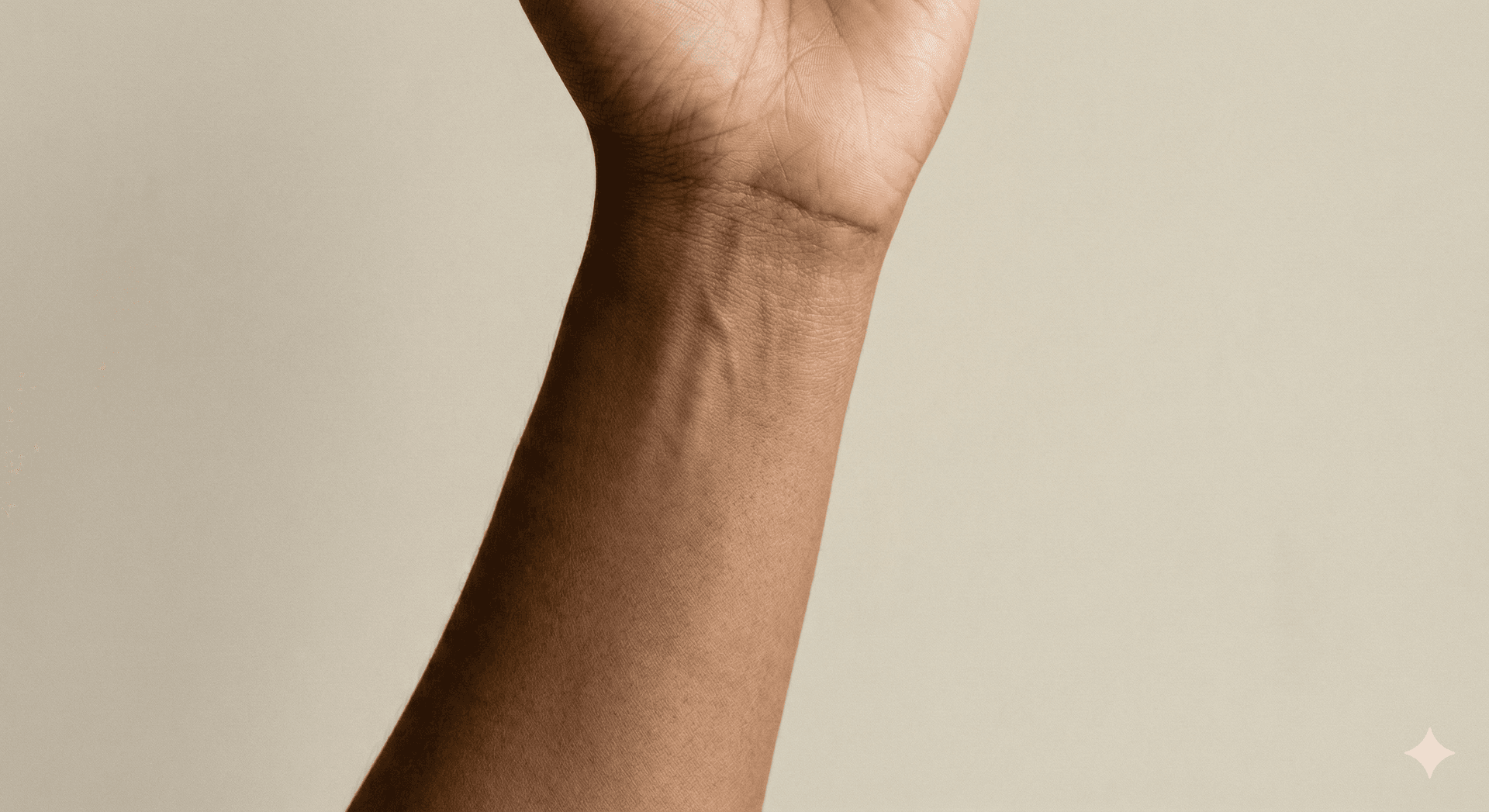
The result? Veins appear muddy, greenish-blue, or dark regardless of actual undertone.
Lighting Conditions Make Vein Color Unreliable
Brown skin veins shift appearance dramatically depending on light source.
In natural daylight, veins may look greenish due to how blue light interacts with yellow melanin. Under warm indoor lighting, the same veins appear darker or more neutral. In shade, they can look bluish.
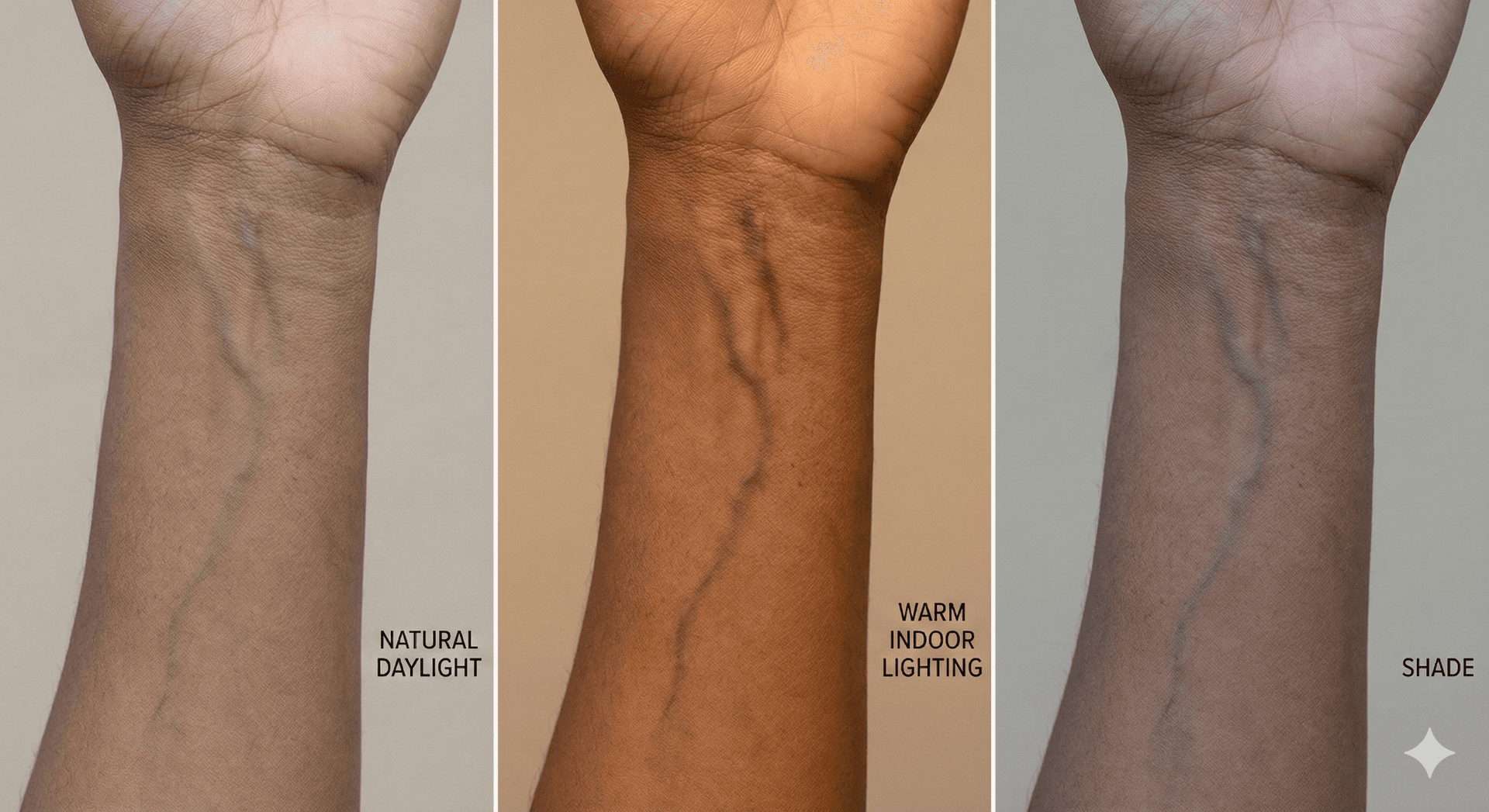
This inconsistency makes the vein test fundamentally unreliable for determining undertone.
Vein Appearance Reflects Skin Biology, Not Undertone
What the vein test actually shows:
✅ Melanin concentration in the epidermis ✅ Skin thickness at the wrist ✅ Blood oxygenation levels ✅ Hydration status
What it doesn't show:
❌ Your actual undertone (the color cast beneath the surface)
What Actually Works for Brown Skin Undertone
Instead of the vein test, use these science-backed methods:
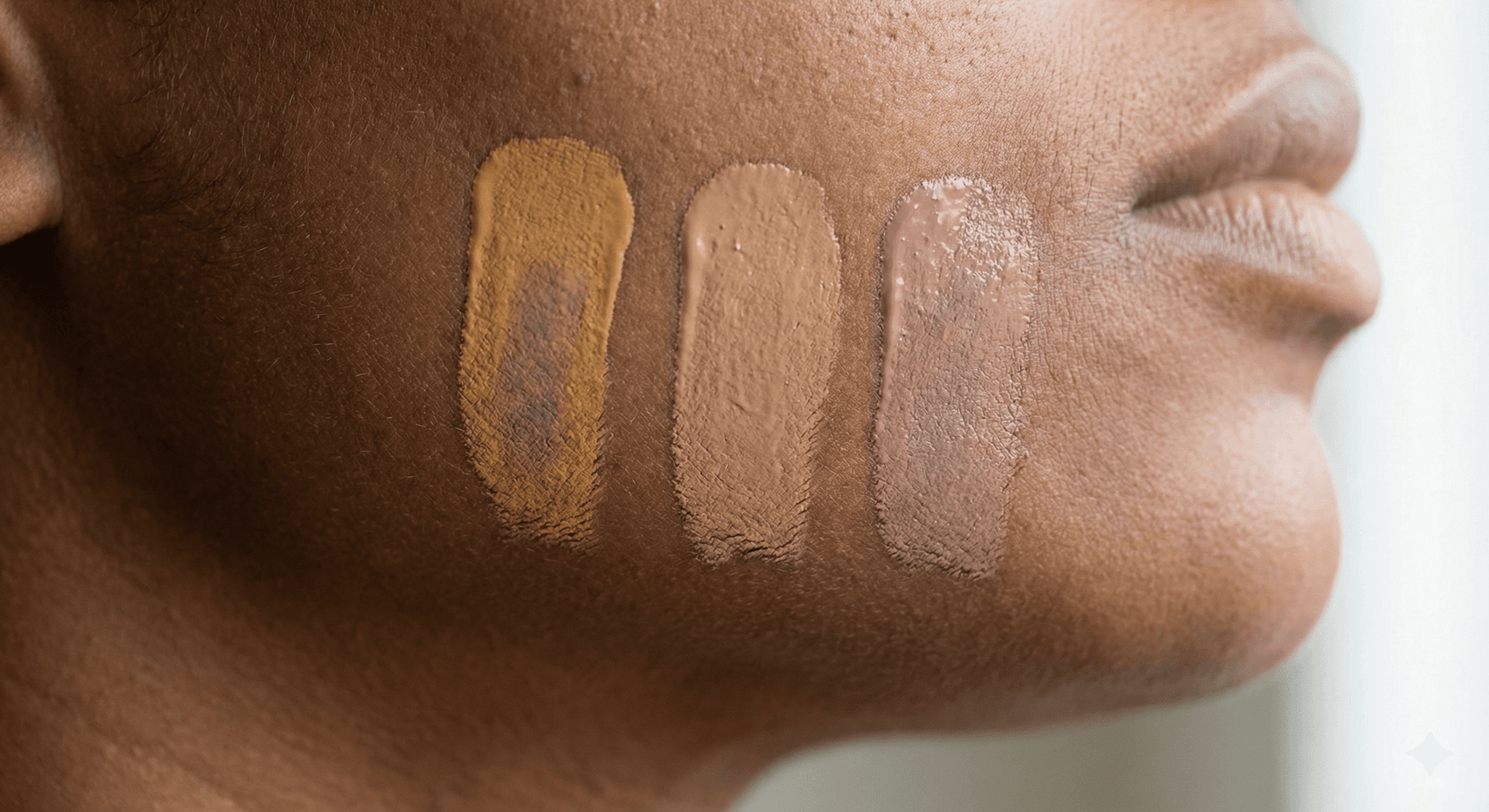
Foundation Matching Test
Apply three different undertone formulas (warm, neutral, cool) on your jawline. Wait 15 minutes. The wrong undertone will turn grey, ashy, or obviously mismatched.
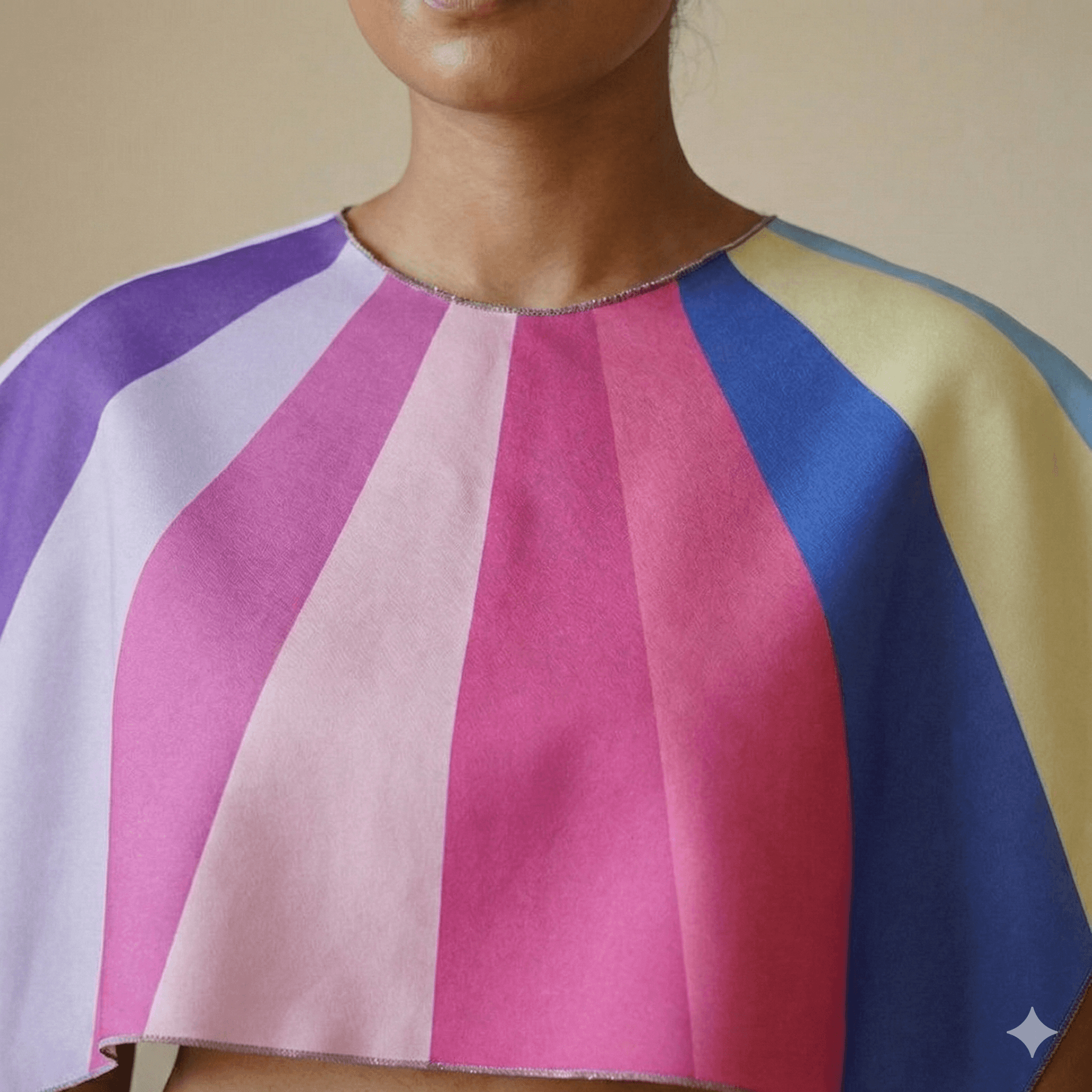
Fabric Draping Method
Hold different colored fabrics near your face in natural light. Notice which colors make your skin look radiant versus dull or grey.
Brightness and Chroma Analysis
Observe whether high-intensity colors or muted tones complement your natural melanin depth better.
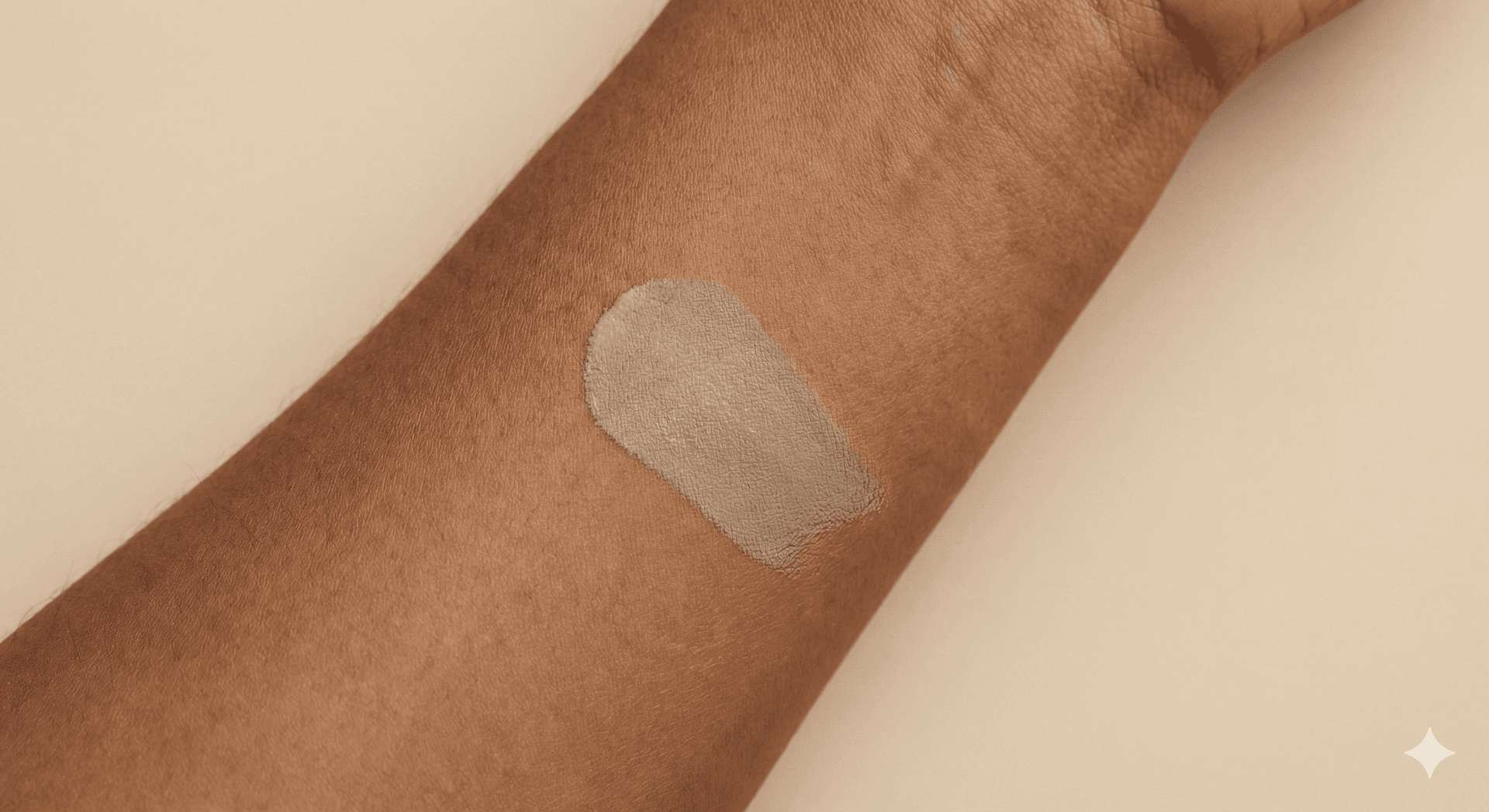
Olive Undertone Check
If beige or tan foundations consistently turn grey on you, you likely have olive (yellow-green) undertones that most guides overlook. Our guide to understanding undertone covers olive in depth. It's common in South Asian skin but rarely addressed in standard color advice.
Why This Myth Persists
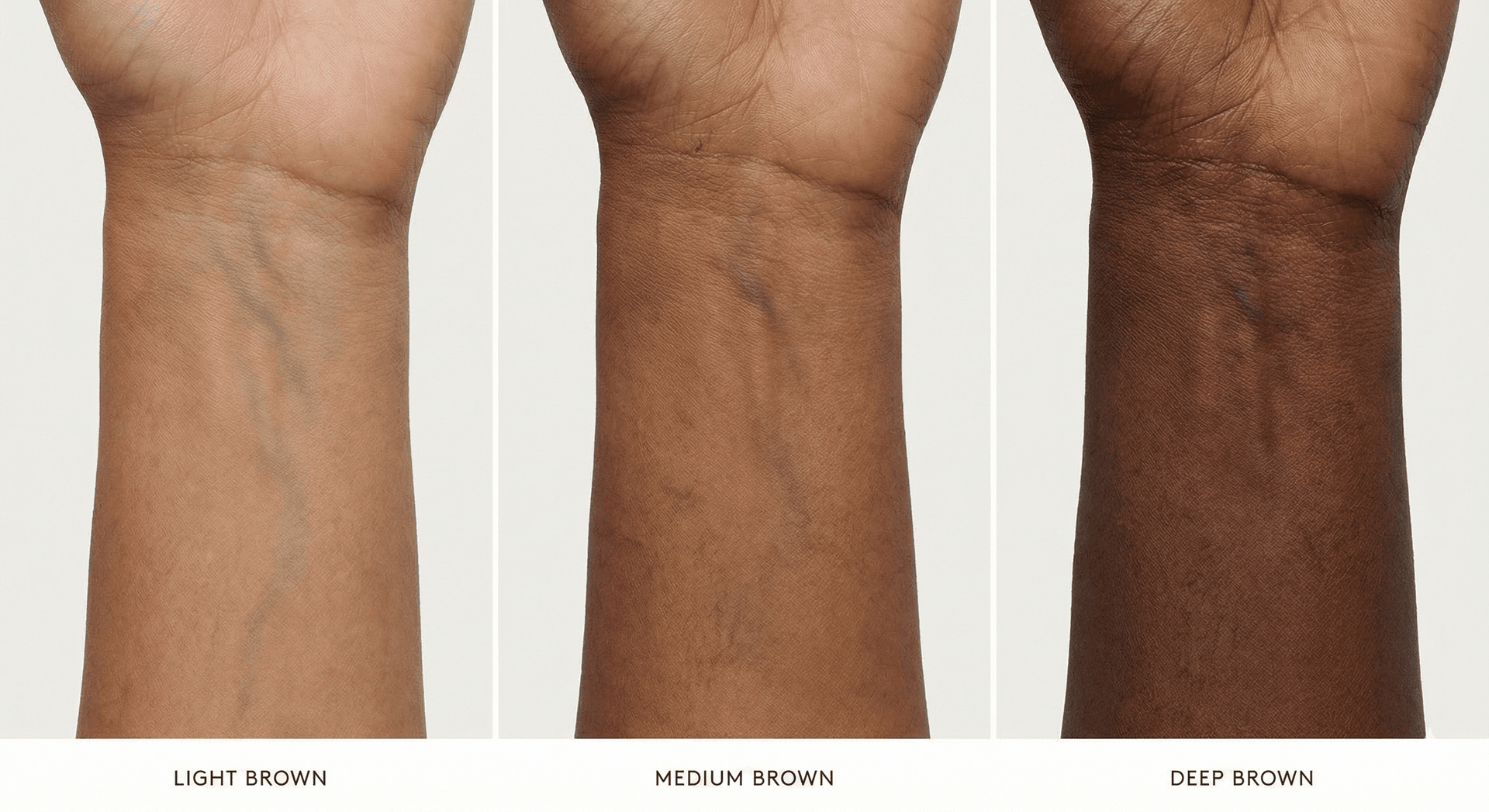
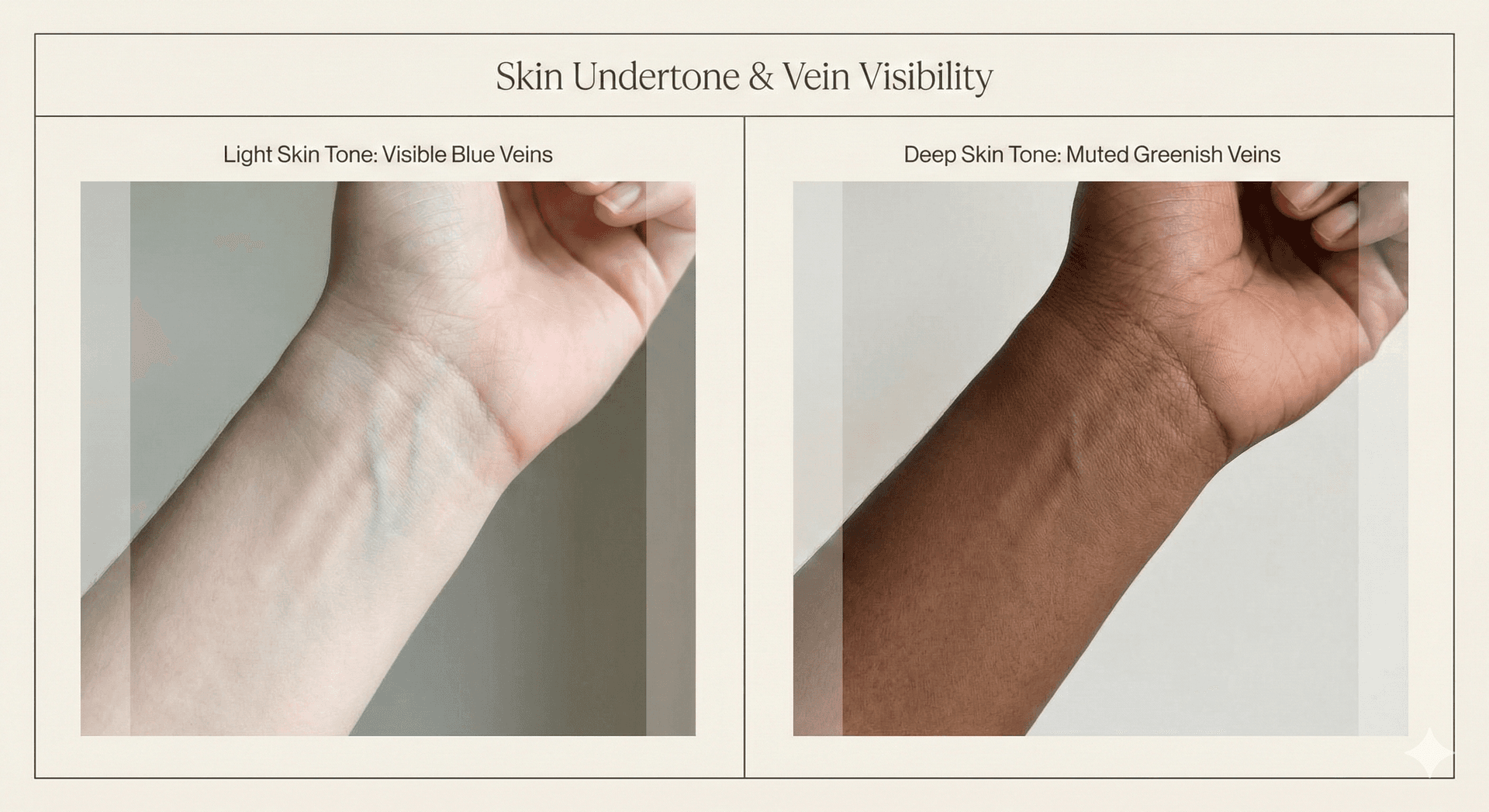
The vein test works reasonably well for light skin with lower melanin density, where veins are more visible and less affected by pigment interference.
When this advice gets shared online without consideration for melanin diversity, it misleads people with brown skin into thinking they're doing something wrong. The test itself is inadequate for their skin.
FAQs
Can the vein test ever work for brown skin?
In rare cases with very light brown skin and high vein visibility, it might provide hints, but it remains unreliable compared to foundation matching or fabric draping.
My veins look green. Does that mean anything?
Not necessarily. Green appearance often results from optical mixing between blue veins and yellow-toned melanin, not from having warm undertones.
What if my veins look blue?
This also doesn't confirm cool undertones. Lighting, skin thickness, and melanin distribution all affect perceived vein color more than undertone does.
Is there any quick test that works for brown skin?
The fastest reliable method is comparing how gold versus silver jewelry looks against your skin in natural daylight, though even this should be combined with foundation matching for accuracy. Once you know your undertone, our best clothing colors guide maps palettes to each category.
Ready to discover your true undertone? Get your personalized color analysis with CAPSI – optimized specifically for melanin-rich complexions with accurate olive undertone detection.
Ready to Discover Your Perfect Colors?
Get your personalized color analysis with CAPSI's computer vision analysis system
Get Your AnalysisAbout CAPSI Team
The CAPSI team is dedicated to providing science-backed color analysis and styling guidance for South Asian individuals.
Related Articles

Why Most Color Analysis Tools Get Brown Skin Wrong
Western color analysis systems were never calibrated for melanin-rich skin. Here's the science behind why they fail brown skin — and what a system built for South Asian complexions actually looks like.
Complete Guide to Color Analysis for Brown Skin
A science-backed guide to undertone, depth, chroma, and seasonal systems, and why traditional color analysis fails brown skin. Optimized for South Asian skin tones.

No, ChatGPT Cannot Tell Your Undertone From a Photo (Here's Why)
Why general-purpose AI tools fail at undertone detection, especially for brown skin, and what actually works instead.