Understanding Your Skin Undertone: A Complete Guide for South Asian Skin Tones
Learn how to identify your skin undertone and discover why it matters for choosing the perfect colors, makeup, and jewelry for South Asian skin tones.
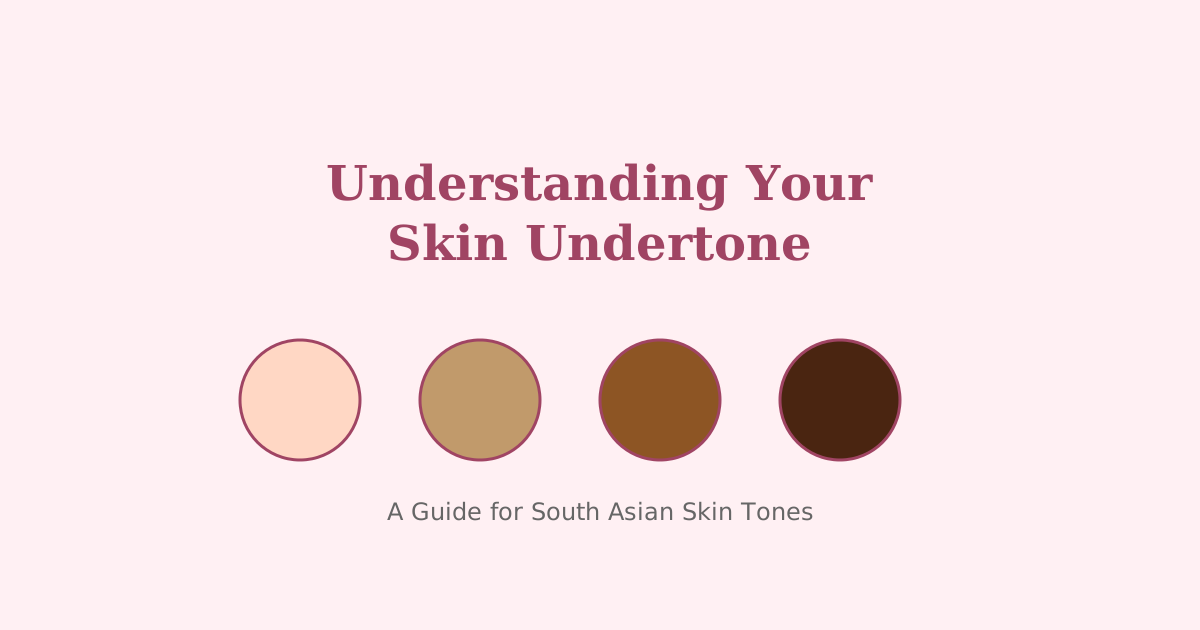
Your skin undertone is the subtle hue beneath the surface of your skin. It's what determines which colors make you look clear and radiant versus washed out or grey. Unlike your surface tone, which changes with sun exposure and season, undertone is genetic. It doesn't shift. Once you know yours, color choices across clothing, makeup, and jewelry become much more consistent.
For South Asian skin specifically, the standard warm/cool framework often misses a fourth category: olive. Olive undertones are common in the subcontinent and diaspora, but most mainstream guides treat them as either warm or neutral. They aren't. Olive has its own distinct color logic, and forcing it into warm or cool categories is why so many people end up with palettes that feel almost right but never quite work.
What is Skin Undertone?
Undertone is the color cast that shows through your skin: golden (warm), pink or blue (cool), balanced (neutral), or yellow-green (olive). It's genetic. It doesn't change with sun exposure or season. Once you know yours, you can choose clothing, makeup, and jewelry with confidence.
The Three Main Undertones (Plus One Special for Us!)
Cool Undertones
Cool undertones have a pink, red, or bluish cast to the skin. If you have cool undertones:
- Silver jewelry tends to look better on you than gold
- You burn easily in the sun rather than tanning
- The veins on your inner wrist appear blue or purple
- You look best in jewel tones like emerald, sapphire, and ruby
Warm Undertones
Warm undertones have a yellow, peachy, or golden cast. If you have warm undertones:
- Gold jewelry complements your skin beautifully
- You tan easily with minimal burning
- Your inner wrist veins appear green or olive
- You shine in earth tones like terracotta, olive green, and warm browns
Neutral Undertones
Neutral undertones are a balanced mix of both warm and cool. If you're neutral:
- Both silver and gold jewelry look good on you
- You can wear a wide range of colors
- Your veins may appear blue-green
- You have flexibility in your color choices
Olive Undertones (The South Asian Secret!)
Here's what many color analysis systems miss: olive undertones are common in South Asian skin. Olive is not just "neutral" – it's a distinct category with green-gray undertones.
If you have olive undertones:
- You may have struggled with foundation matching (they look too pink or too yellow)
- You look amazing in olive green, sage, and mossy tones
- Bronze jewelry might be your secret weapon
- Traditional "warm" or "cool" categorizations never quite fit
Simple Tests to Find Your Undertone
The White Paper Test
Hold a piece of pure white paper next to your face in natural light:
- Pink/rosy reflection = Cool undertone
- Yellow/golden reflection = Warm undertone
- Gray/green reflection = Olive undertone
- No strong color shift = Neutral undertone
The Jewelry Test
Try on pure silver and pure gold jewelry:
- Silver flatters you more = Cool or olive undertone
- Gold looks better = Warm undertone
- Both look equally good = Neutral undertone
- Bronze or rose gold wins = Likely olive undertone
The Vein Test (Unreliable for Brown Skin)
The vein test doesn't work reliably for melanin-rich complexions. Melanin filters and scatters light, which obscures the actual color of underlying blood vessels. Veins on brown skin often appear greenish from optical mixing between blue vessels and yellow-toned melanin, regardless of actual undertone. Lighting conditions also shift vein appearance dramatically.
If you have lighter brown skin and can clearly see your veins, the test may offer a rough hint. But for most people with medium-to-deep skin, the result is inconclusive at best and actively misleading at worst. Use the jewelry test or white paper test instead.
From Undertone to Color Choices
Once you know your undertone, color selection becomes much more consistent. Warm undertones shine in earth tones, terracotta, and golden yellows. Cool undertones look best in sapphire, true red, and fuchsia. Neutral can pull from both. Olive has its own palette: magenta, deep teal, eggplant. That category tends to get overlooked in standard guides. Our best clothing colors guide for brown skin breaks down palettes by undertone category with specific color recommendations for each.
For jewelry, gold versus silver versus rose gold follows the same logic: warm metals for warm undertones, cool for cool, rose gold or bronze for olive.
Why This Matters for South Asian Skin
Understanding your undertone unlocks:
- Better Foundation Matching: No more "too pink" or "too orange" foundation disasters
- Flattering Saree & Lehenga Colors: Traditional wear that makes you glow
- Perfect Jewelry Choices: Gold, silver, or rose gold for your skin
- Makeup That Works: Lipstick and blush shades that complement naturally
- Wardrobe Confidence: Knowing which colors to invest in
Beyond Undertone: The Full Picture
While undertone is crucial, remember that effective color analysis also considers:
- Depth (how light or dark your skin is)
- Chroma (how muted or saturated your natural coloring is)
- Contrast (the difference between your skin, hair, and eyes)
This is where CAPSI's computer vision color analysis comes in – we analyze all these factors specifically optimized for South Asian skin tones, including proper olive undertone detection.
Why Undertone Is Harder to Read on Brown Skin
Melanin adds a layer that affects how undertone presents. On lighter skin, contrast between surface and undertone is obvious. On brown skin, the warmth or coolness can be subtle. A slight golden cast versus a slight blue cast doesn't always read clearly under standard lighting or in photos. That's why at-home tests sometimes feel inconclusive, and why a single photo fed into a general AI tool tends to produce unreliable results.
Olive is especially tricky. It reads as "neither warm nor cool" because it has both yellow and green. Many people with olive undertones get placed in neutral by default, then given palettes that don't quite work. If traditional warm/cool never felt right, olive is worth investigating.
Common Undertone Myths for South Asian Skin
Myth #1: "Dark skin = warm undertone"
False! You can have deep skin with cool undertones. Think of how stunning deep skin looks in royal purple or emerald green (cool colors).
Myth #2: "Fair skin = cool undertone"
False! Many fair South Asian individuals have warm or olive undertones and look washed out in cool colors.
Myth #3: "You can change your undertone"
False! While your skin tone can tan or lighten, your undertone is genetic and permanent.
Key Takeaways
- Undertone is the subtle hue beneath your skin's surface (cool, warm, neutral, or olive)
- Olive undertones are common in South Asian skin but often missed by generic systems
- Simple tests like the white paper test and jewelry test can help identify your undertone
- Understanding undertone leads to better color choices in fashion, makeup, and jewelry
- Professional analysis considers undertone plus depth, chroma, and contrast for comprehensive guidance
Frequently Asked Questions
Can brown skin be cool toned?
Yes. Depth and undertone are separate. Deep brown skin can have cool undertones. Think of how stunning royal purple or sapphire looks on some complexions. "Dark skin = warm" is a myth.
Is the vein test accurate for brown skin?
No. The vein test fails for melanin-rich skin because melanin absorbs and scatters light, obscuring true vein color. Use the jewelry test or white paper test instead.
How do I know my undertone if I'm between warm and cool?
You may have neutral or olive undertones. Neutral = both silver and gold look good. Olive = neither quite fits, but bronze or rose gold often works; foundations turn grey in beige shades. The jewelry test is the most reliable at-home method.
Does undertone change with tanning?
No. Surface tone (what you see) darkens; undertone (the hue beneath) stays constant. Your best colors don't change with the seasons.
Ready to discover your complete color profile? Get your personalized color analysis with CAPSI – optimized specifically for South Asian skin tones, including accurate olive undertone detection.
Ready to Discover Your Perfect Colors?
Get your personalized color analysis with CAPSI's computer vision analysis system
Get Your AnalysisAbout CAPSI Team
The CAPSI team is dedicated to providing science-backed color analysis and styling guidance for South Asian individuals.
Related Articles

Olive Undertone: The Color Season That Doesn't Exist (And Why It Should)
Olive undertone is real, measurable, and common in South Asian skin — but most color analysis systems don't have a category for it. Here's the science and what it actually means for your wardrobe.

Why Most Color Analysis Tools Get Brown Skin Wrong
Western color analysis systems were never calibrated for melanin-rich skin. Here's the science behind why they fail brown skin — and what a system built for South Asian complexions actually looks like.
Complete Guide to Color Analysis for Brown Skin
A science-backed guide to undertone, depth, chroma, and seasonal systems, and why traditional color analysis fails brown skin. Optimized for South Asian skin tones.