The Best Jewel Tones for Brown Brides (and Why They Photograph So Well)
Why jewel tones look stunning on brown brides in photos and in person, plus how to choose the right ones for your undertone and wedding events.
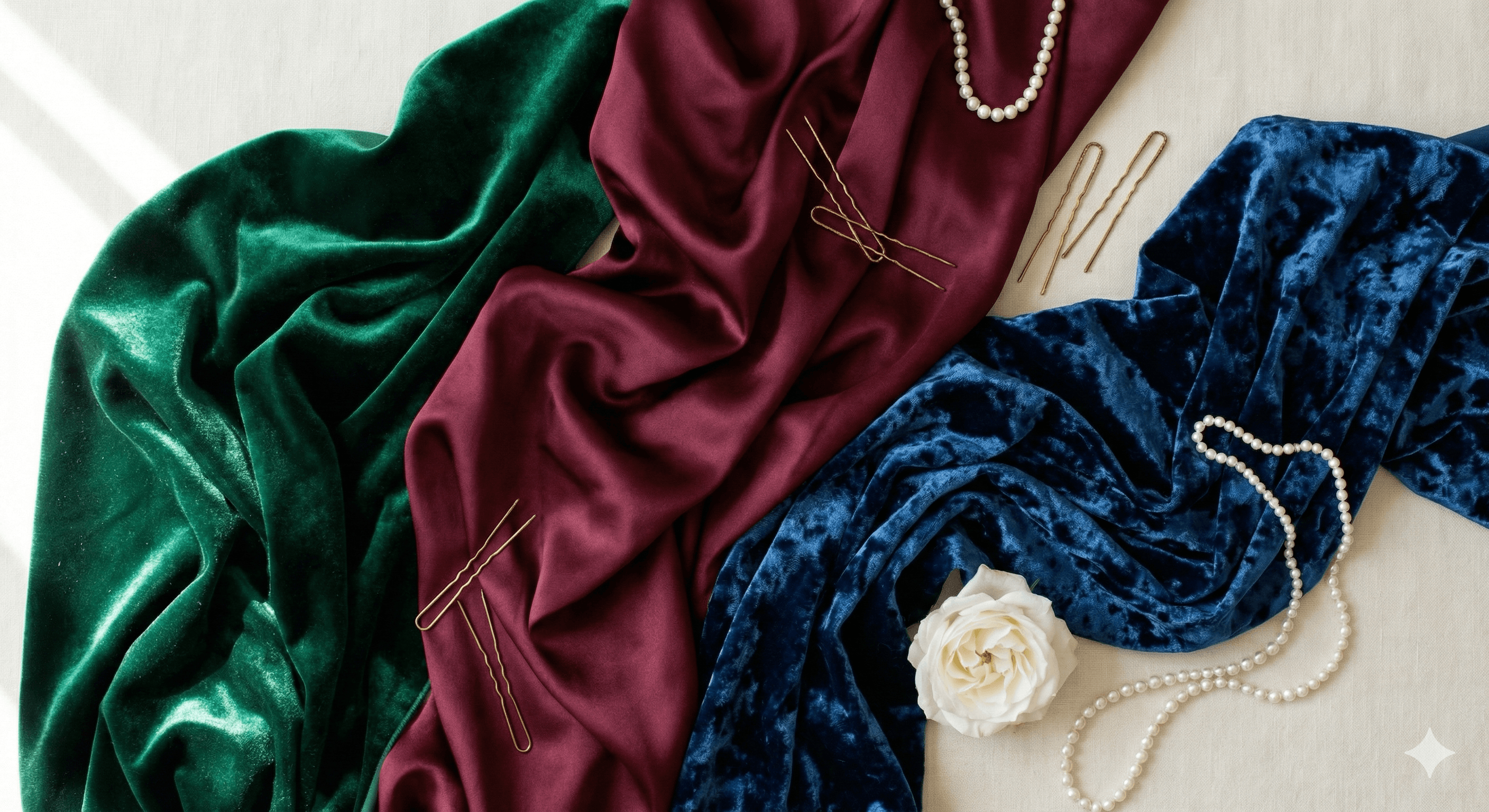
Jewel tones photograph well on brown brides because they have the chroma to match melanin-rich skin. Emerald, sapphire, ruby, and amethyst are dense, saturated colors with optical depth. They don't get washed out under shifting venue lighting or camera flash. On brown skin, that intensity creates harmony rather than contrast, which is why photos in jewel tones tend to look sharp and cohesive while photos in muted or pastel shades often look flat.
Which jewel tones work best depends on undertone. The category "jewel tone" covers warm shades (ruby, amber, topaz), cool shades (sapphire, amethyst, fuchsia), and neutral shades (deep teal, burgundy, forest green). Getting the temperature right matters as much as the saturation level.
What Makes Jewel Tones Work on Brown Skin
They Have Depth
Emerald, sapphire, ruby: these colors have layers. They catch light without looking flat, creating visual harmony with skin that also has depth.
They're Saturated
No muddiness or greyness. Brown skin typically has high natural saturation, so colors with equal intensity create balance. Muted alternatives in the same hue family, like dusty sage versus saturated emerald, or muted mauve versus deep magenta, look flat by comparison.
They're Clear
Jewel tones are pure, vivid versions of a color. Emerald green versus sage green. One is vibrant and jewel-like, the other has grey mixed in. Clear colors reflect light back and make brown skin glow. Our guide to best clothing colors for brown skin explains chroma in more detail and covers color palettes by undertone.
Choosing Based on Undertone
Your undertone determines which jewel tones create harmony versus clash. If you're not sure, our guide to understanding undertone covers the jewelry test and white paper test, both of which are reliable for brown skin.
Warm Undertones
Emerald green, ruby red (with orange undertones), topaz, amber, copper. Colors to skip: Sapphire blue, cool-toned amethyst, icy fuchsia.
Warm undertones have a golden or peachy cast beneath the skin. Jewel tones with warmth in them create harmony: the richness of warm emerald, the orange-leaning depth of topaz, the fire of a warm ruby. Cool sapphire and amethyst read as slightly off, too blue against a warm base.
Neutral-Warm Undertones
Deep teal, wine, burgundy, forest green, rich navy, deep plum.
This is the most flexible undertone category for jewel tones. You can mix warm and cool shades because the neutral base allows range.
Olive-Neutral Undertones
Magenta, deep teal, eggplant purple, berry tones, burgundy.
Colors to skip: Copper, warm amber, orange-based jewel tones.
Olive undertones have a yellow-green cast that makes standard warm jewel tones look muddier. The fix is jewel tones with cool or blue-based qualities: magenta reads beautifully against olive skin, as does deep teal and eggplant. These are the colors that make olive undertones glow in photos.
Cool-Neutral Undertones
Sapphire blue, true red (blue-based), fuchsia, royal purple, crimson.
Colors to skip: Amber, copper, warm topaz.
Cool undertones have a subtle red or pink cast. The jewel tones that play into that cast look cohesive. Sapphire blue is especially good. True red (not orange-red) is a power color. Royal purple creates a rich, polished effect.
Jewel Tones Across Wedding Events
Different events have different lighting, and different roles in the wedding have different visibility. Jewel tones are reliable across all of these, but here's how to think about which shades to choose:
Haldi and Mehndi: These events tend to be daytime with warm outdoor or indoor lighting. Warm jewel tones (topaz, warm emerald, copper-adjacent burgundy) photograph especially well in these conditions. Bright magenta is a standout on olive and neutral undertones.
Sangeet: Usually indoor with warm ambient lighting and flash photography. This is where jewel tones show their advantage over muted shades. Deep teal, sapphire, and ruby hold up under flash and artificial lighting in ways that dusty rose and sage cannot.
Wedding ceremony: For the primary outfit, the key is choosing a jewel tone that creates harmony with your undertone at its highest intensity. This is not a setting to go subtle. Deep, rich color photographs well under mixed lighting and looks intentional in person.
Reception: A slightly different jewel tone than the ceremony, or the same shade in a different silhouette. Burgundy and wine are particularly strong for reception wear because they're rich and versatile across skin tones without requiring perfect undertone alignment.
Using Jewel Tones Across the Bridal Palette
Bridal party: Jewel-toned dresses photograph well and create a sophisticated palette when mixed. Emerald, burgundy, and navy together work. Deep teal and plum work. Mixing shades within the same temperature range (all warm or all cool) keeps the palette cohesive.
Decor: Deep jewel-toned flowers and table linens create strong contrast against warm reception lighting without looking heavy. They read clearly in photos and hold their color better than pastels under flash.
Your look: Use jewel tones in your dupatta, blouse, or lehenga. Or make a jewel tone your primary bridal color. This works especially well for second-day or reception wear where there's more flexibility.
Metallics pairing: Gold with emerald and ruby. Rose gold with burgundy and plum. Silver with sapphire and fuchsia. Matching the metal temperature to the jewel tone temperature creates a cohesive, finished look. For a full breakdown of which metals work by undertone, our gold vs silver guide covers the logic.
Balance: Add cream, champagne, or warm white to lighten without losing richness. Stark white can compete with jewel tones. Cream complements them.
Testing Your Colors
Hold fabric swatches to your face in natural light. Take photos in your venue's lighting if you can access it early. If a color makes your skin look clear and radiant, it works.
Don't rely on store lighting or screen previews. Colors shift significantly under different conditions, and jewel tones especially can look darker or more vivid on screen than in person.
Frequently Asked Questions
Is there a jewel tone that works for all brown skin undertones?
Deep teal and burgundy are the most versatile. Both have a balance of warm and cool qualities that allows them to work across neutral-warm, olive, and cool undertones. Warm undertones can wear them with a slightly warm version; cool undertones with a slightly cooler version. Neither requires a specific undertone match the way amber (strongly warm) or sapphire (strongly cool) do.
How do I choose between jewel tones for multiple wedding events?
Match the tone temperature to the event lighting and timing. Warm jewel tones (amber, copper, warm emerald) perform well outdoors and in warm indoor light. Cool jewel tones (sapphire, fuchsia, royal purple) are especially strong under flash. Keep your undertone as the constant and vary the shade and depth across events.
Can I wear jewel tones to a formal office or professional setting?
Yes. Sapphire, deep teal, forest green, and burgundy work as professional colors. The key is silhouette: a jewel-toned blouse in a tailored cut reads as polished, not bold. Avoid bright fuchsia or magenta in conservative environments, not because the color is wrong, but because the intensity can read as casual in certain workplace cultures.
What's the difference between jewel tones and bright colors?
Jewel tones are a specific category of saturated color associated with precious stones: rich depth, clarity, and a sense of weight. Bright colors include neon and very high-intensity shades that don't have that depth. Jewel tones have depth and density. Neon brights are high intensity but visually lighter. For brown brides specifically, jewel tones photograph better because the depth creates dimension rather than flat brightness.
Ready to discover your perfect colors? Get your personalized color analysis with CAPSI.
Ready to Discover Your Perfect Colors?
Get your personalized color analysis with CAPSI's computer vision analysis system
Get Your AnalysisAbout CAPSI Team
The CAPSI team is dedicated to providing science-backed color analysis and styling guidance for South Asian individuals.
Related Articles

Olive Undertone: The Color Season That Doesn't Exist (And Why It Should)
Olive undertone is real, measurable, and common in South Asian skin — but most color analysis systems don't have a category for it. Here's the science and what it actually means for your wardrobe.

Why Most Color Analysis Tools Get Brown Skin Wrong
Western color analysis systems were never calibrated for melanin-rich skin. Here's the science behind why they fail brown skin — and what a system built for South Asian complexions actually looks like.
Complete Guide to Color Analysis for Brown Skin
A science-backed guide to undertone, depth, chroma, and seasonal systems, and why traditional color analysis fails brown skin. Optimized for South Asian skin tones.