How to Build a Flattering and Functional Wardrobe Using Color
Stop buying clothes you never wear. Build a wardrobe that actually works for your lifestyle using color clarity instead of chasing trends.
The Closet Full of Clothes You Don't Wear
Your closet is packed. You have options. But somehow, getting dressed still feels like a struggle.
You pull out pieces that looked good in the store but don't work with anything you own. You have statement pieces that never get worn because they don't fit into your daily rotation. You keep reaching for the same five items while the rest of your wardrobe collects dust.
The problem isn't that you need more clothes. It's that most of what you own doesn't actually work for you.
And usually, the issue is color.
Why Random Shopping Creates Wardrobe Chaos
Most people buy clothes reactively. Something catches your eye. It's on sale. It's trendy. You saw it on someone else and it looked great. You buy it.
Then you get home and it sits in your closet because it doesn't go with anything. Or it makes your skin look tired. Or it's a color you already have three other versions of, none of which you actually wear.
This approach creates a wardrobe with no cohesion. Nothing talks to anything else. Getting dressed becomes a daily puzzle with pieces that don't fit together.
The fix isn't buying more stuff. It's getting strategic about color.
What a Color-Based Wardrobe Actually Means
A color-based wardrobe isn't about only wearing certain colors. It's about building around colors that work with your skin tone and with each other.
You start with your best colors. The ones that make your skin glow. The ones you consistently get compliments in. The ones that make you feel like yourself.
Then you build outward from there, making sure everything you add either fits into your existing color story or is intentional enough to stand alone.
This creates a wardrobe where most pieces can mix and match without effort. Where getting dressed is faster because you're not fighting against color clashes. Where everything you own actually gets worn.
Step One: Identify Your Core Colors
Before you buy anything else, figure out which colors actually work for you. Our best clothing colors for brown skin breaks down palettes by undertone. Start there. Understanding your undertone is the foundation. Without it, you're guessing.
Your Signature Colors
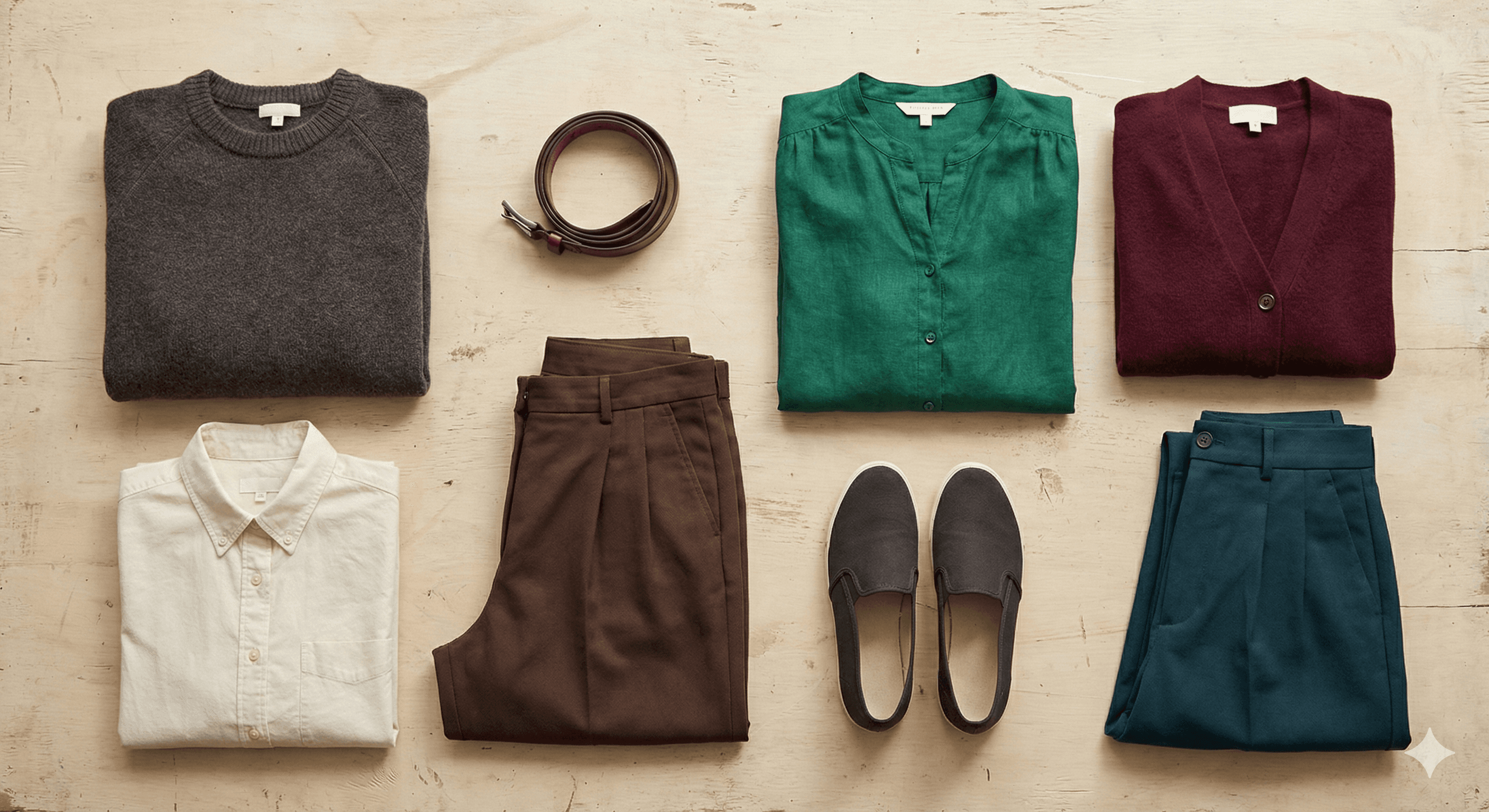
These are the colors that consistently make you look and feel amazing. The emerald green dress that always gets compliments. The burgundy top that makes your skin glow. The deep teal that just works.
You probably already know what some of these are. Pay attention to what you reach for when you want to look your best. Notice which colors people comment on.
For brown skin, these are usually saturated jewel tones or rich earth tones. Rarely pastels or muted shades.
Your Safe Neutrals
Not all neutrals work on brown skin. Grey can look muddy on warm undertones. Beige can wash out olive undertones. Stark white can be harsh.
Find your neutrals that don't drain you. For many people with brown skin, this means warm charcoal instead of grey, cream instead of white, chocolate brown instead of tan.
These become your foundational pieces. The things you can throw on without thinking and still look pulled together.
Your Statement Colors
These are the bold choices. The colors that make an impact. You don't need many of these, but having a few creates visual interest without chaos.
Maybe it's a bright magenta that works well with your olive undertones. Or a rich sapphire that suits your cool-neutral skin. Or a deep rust that brings out warmth in your complexion. Why some outfits look polished comes down to this clarity. The right colors in simple silhouettes beat wrong colors in complex ones.
Pick one to three statement colors and stick with them. This creates consistency without being boring.
Step Two: Audit What You Already Own
Go through your closet and separate things into three categories.
Keeps
Colors that make you look good. Pieces you actually wear. Things that fit into your color story.
These stay. Everything else is being evaluated.
Maybes
Pieces in colors that might work but you're not sure. Things you like in theory but don't wear. Gifts or impulse buys you're holding onto out of guilt.
Try these on. Hold them up to your face in natural light. Do they make your skin look clear or tired? Do they fit with your core colors?
If they pass the test, they stay. If not, they go.
Definitely Nots
Colors that wash you out. Things you never wear because they don't go with anything. Pieces that make you look grey or dull.
Don't keep these out of obligation. If a color doesn't work for you, it doesn't matter how expensive it was or who gave it to you. It's taking up space.
Step Three: Build Intentionally
Once you know your core colors, every purchase becomes easier.
The One Question Test
Before buying anything new, ask: "Does this color already work with at least three things I own?"
If yes, it's probably a good addition. If no, it needs to be intentional enough to stand alone. A statement piece you'll build outfits around, not another random item that doesn't fit.
This one question prevents most impulse purchases and wardrobe clutter.
Start With Basics in Your Colors
You need foundational pieces. Tops, pants, dresses in your safe neutrals and signature colors.
These don't have to be boring. A well-fitted top in your perfect shade of teal is both basic and interesting. A pair of pants in warm charcoal goes with everything.
Build these first. Then add statement pieces.
Add One Statement Piece at a Time
Once your basics are solid, you can add bold colors or prints. But do it slowly and intentionally.
A statement piece should either complement your existing wardrobe or be special enough to justify building new outfits around it. Not just something that looked cool in the store.
How This Works for Brown Skin Specifically
Brown skin has different needs than what most wardrobe advice assumes.
High Chroma Is Your Friend
Most "capsule wardrobe" advice pushes muted, neutral tones. Soft greys, dusty blues, pale pinks.
For brown skin, this usually doesn't work. You need color intensity. Jewel tones, rich earth tones, saturated colors.
Don't feel like you have to build a "quiet luxury" wardrobe if your skin demands vibrancy. Your wardrobe should reflect your natural coloring, which typically has depth and richness.
Undertone Consistency Matters
If you have warm undertones, filling your wardrobe with cool-toned neutrals will never feel cohesive. Every outfit will require mental energy to make work.
Stick to your undertone lane for neutrals and basics. Save experimentation for statement pieces where you can afford for something to be a standalone item.
Your Neutrals Are Different
Standard neutral palettes (grey, navy, white, beige) often don't work on brown skin. You might need warm charcoal, chocolate brown, cream, and deep teal instead.
That's fine. Build your wardrobe around neutrals that actually work for you, not the ones that are supposed to be "universal."
Creating a Color Palette That Functions
A functional wardrobe palette for brown skin usually looks something like this:
Three to Four Neutrals
These are your workhorses. Pieces in these colors should be high quality and well-fitted because you'll wear them constantly.
Examples: Warm charcoal, chocolate brown, cream, soft black.
Two to Three Signature Colors
These are colors you love and look great in. They should work with most of your neutrals.
Examples for warm undertones: Emerald green, burgundy, rust.
Examples for cool undertones: Sapphire blue, fuchsia, true red.
One to Two Statement Colors
Bold choices that add personality. These don't need to mix with everything. They're special.
Examples: Bright magenta, deep teal, copper.
This creates a palette of six to nine colors. Small enough to be cohesive, large enough to not feel restrictive.
Making It Work Day to Day
The Five-Minute Morning
When your wardrobe is color-coordinated, getting dressed is fast. You're not trying to make mismatched colors work. You're pulling from a palette that already harmonizes.
Grab a neutral base. Add a signature color. Done.
The Outfit Formula
Most days, you're wearing some version of the same formula: neutral bottom, signature or neutral top, statement accessory if you want one.
This isn't boring when your colors are right. It's effortless.
The Remix
Because everything in your wardrobe works together color-wise, you can remix pieces without thinking hard about it. That burgundy top goes with the charcoal pants or the cream skirt or the chocolate brown trousers. All those combinations already work.
What This Solves
A color-based wardrobe fixes the problems that most wardrobe advice doesn't touch.
You stop feeling like you have nothing to wear despite a full closet. You stop buying things that never get worn. You stop spending mental energy every morning trying to make mismatched pieces work together.
Getting dressed becomes easier. Your outfits look more intentional. You feel more confident because you're working with your natural coloring instead of against it.
And you probably spend less money because you're not buying random pieces that don't fit into your wardrobe.
Key Takeaways
- Most wardrobe chaos comes from color mismatches, not lack of options
- A color-based wardrobe starts with identifying your signature colors, safe neutrals, and statement shades
- Brown skin typically needs high-chroma colors and undertone-specific neutrals
- Building around six to nine core colors creates cohesion without restriction
- Every new purchase should either work with what you own or be intentional enough to stand alone
Frequently Asked Questions
How many colors should a functional wardrobe actually have?
Six to nine core colors is a practical range for most people: three to four neutrals, two to three signature colors, and one to two statement shades. Below that and it can feel restrictive. Above that and cohesion starts to break down unless every color was chosen deliberately.
How do I avoid buying the wrong colors when shopping online?
Check the return policy first, then order two to three color options of the same style from your likely and uncertain undertone categories. Compare them in natural light when they arrive. The right one will be obvious in person, even if the product photos looked similar. Keep the winner, return the rest.
What if my undertone is shifting seasonally?
Undertone doesn't change. Surface tone does, with sun exposure, illness, or aging. If a color that worked last year doesn't work now, check whether your depth has shifted rather than your undertone. The color temperature direction (warm, cool, olive) stays constant. The saturation intensity you need may change slightly with depth.
What's a quick test to know if a color will work before buying?
Hold the garment under your chin in natural daylight and look at your face, not the fabric. Does your skin look clear and awake? Or flat and tired? That reaction in the first two or three seconds is usually accurate. Store lighting is unreliable. Artificial warm light in particular makes almost everything look wearable when it isn't.
Ready to discover your perfect colors? Get your personalized color analysis with CAPSI.
Ready to Discover Your Perfect Colors?
Get your personalized color analysis with CAPSI's computer vision analysis system
Get Your AnalysisAbout CAPSI Team
The CAPSI team is dedicated to providing science-backed color analysis and styling guidance for South Asian individuals.
Related Articles

Why Most Color Analysis Tools Get Brown Skin Wrong
Western color analysis systems were never calibrated for melanin-rich skin. Here's the science behind why they fail brown skin — and what a system built for South Asian complexions actually looks like.
Complete Guide to Color Analysis for Brown Skin
A science-backed guide to undertone, depth, chroma, and seasonal systems, and why traditional color analysis fails brown skin. Optimized for South Asian skin tones.

No, ChatGPT Cannot Tell Your Undertone From a Photo (Here's Why)
Why general-purpose AI tools fail at undertone detection, especially for brown skin, and what actually works instead.